
There are certain things I would simply never do when designing a luxury home.
Not because there is only one way to create a beautiful interior, but because after more than 30 years as an interior designer, you begin to recognize the decisions that quietly diminish even the most extraordinary architecture.
A custom home can represent a tremendous investment and still feel surprisingly familiar.
The difference is discernment.
Discernment is knowing what is worth discovering. What is worth investing in. What deserves to be noticed. What is relevant now, what will still matter ten years from now, and, perhaps most importantly, what should be left out.
That is what our designers bring to a project.
We consider ourselves taste makers, not simply people who tell clients what to buy. Our job is to understand the design world deeply enough to introduce our clients to things they may never have discovered themselves.
And sometimes, our most valuable recommendation is not what to purchase.
It is what not to do.
Here are five things I would never do as a luxury home designer.
1. I would never buy everything from one showroom.
A custom home should not look like it was purchased in a single afternoon.
When every sofa, table, light fixture, and accessory comes from the same collection, the room loses something essential: a point of view.
The most interesting interiors are layered. Contemporary pieces might sit beside antiques. A hand-finished material might meet something highly architectural. A vintage rug might give an entirely new home a sense of history.
I want a room to feel discovered, not delivered.
That requires knowing where to look.
2. I would never choose lighting without considering the way it makes people feel.
Lighting can make beautiful people look tired and beautiful materials look flat.
The right lighting does the opposite.
It gives stone dimension, creates intimacy, brings warmth to wood, highlights artwork, and changes the emotional temperature of an entire room.
We think about lighting as part of the architecture, not something selected at the end.
A chandelier may be beautiful.
But knowing which chandelier, where, at what scale, with what quality of light is where the design begins.
3. I would never design a home from one inspiration source.
I love Pinterest. I love magazines. I love hotels, museums, fashion, restaurants, travel, architecture, and nature.
But I would never want a client’s home to look like one of them.
The best design happens when seemingly unrelated things begin speaking to one another.
Maybe it is the particular blue of a building seen vacationing over summer in Italy.
Maybe it is a landscape from a family trip to Montana.
Maybe it is an antique chair, a piece of art, or the pattern on a scarf.
I have seen something as simple as a scarf become the inspiration for an entire color palette.
That is the difference between copying an image and developing a point of view.
Our designers are constantly looking.
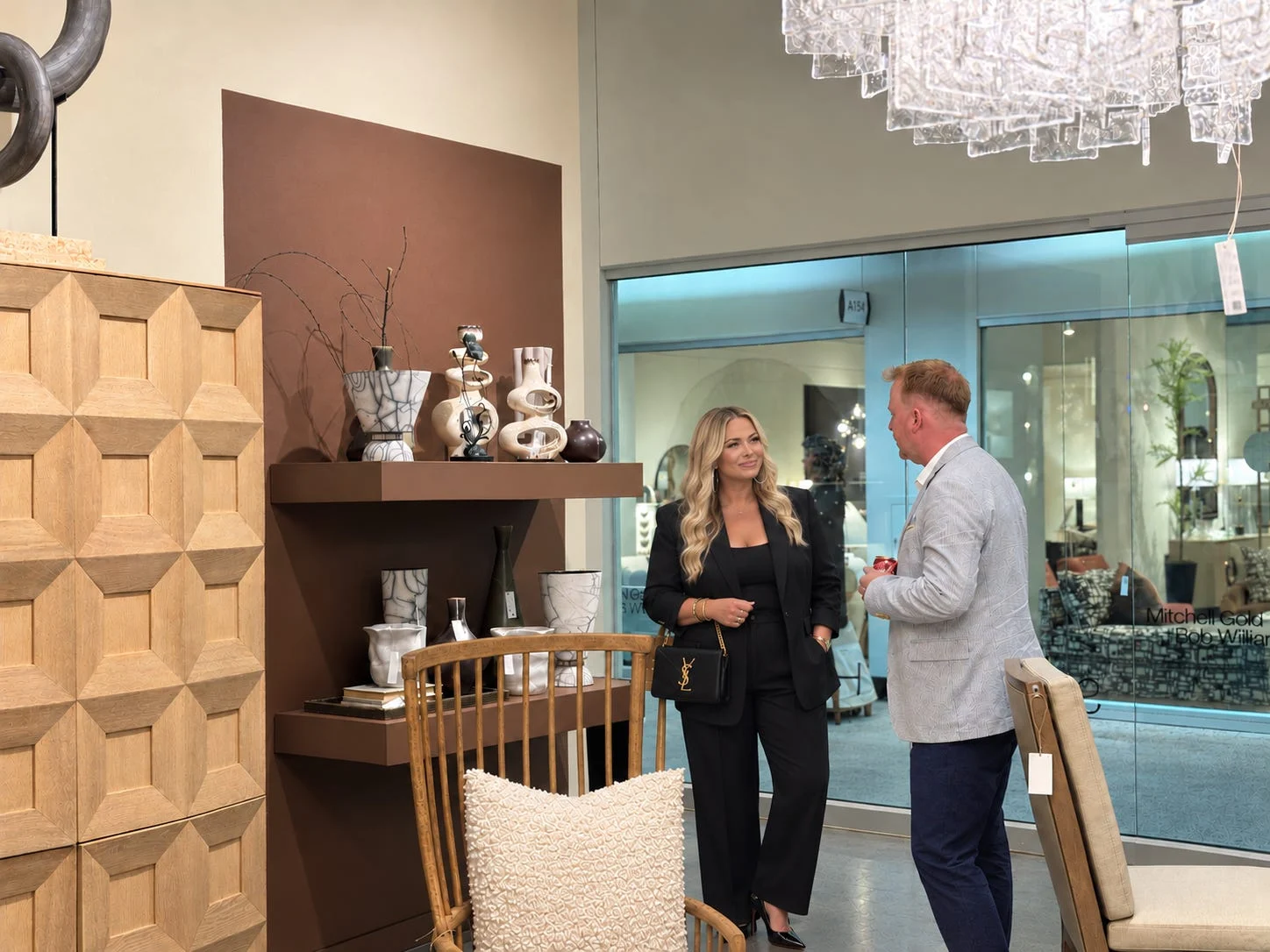
We travel to places like Las Vegas Market to discover new makers, materials, collections, and ideas for our clients. We want to understand what is emerging before it becomes ubiquitous and, just as importantly, recognize what has lasting relevance.
That is part of being a taste maker.
We are not simply asking, “What do you like?”
We are helping answer, “What is worth knowing about?”
4. I would never order furniture, rugs, or fixtures without understanding the scale of the space.
Scale is one of the quietest indicators of sophisticated design.
The wrong proportions can make a generous room feel strangely small. A rug can divide rather than anchor a space. A fixture can disappear beneath a dramatic ceiling or overwhelm the architecture entirely.
The goal is not to fill the room.
It is to make everything feel as though it belongs there.
We study the architecture, circulation, ceiling height, windows, sight lines, and how the room will actually be lived in before we make those decisions.
When the scale is right, you rarely notice it.
You simply know the room feels right.
5. I would never confuse trendy with timeless.
Trends are entertaining. After 30 years in this industry, I have watched plenty of them arrive, dominate, disappear, and eventually return wearing a new name.
There is nothing wrong with being inspired by the moment.
But I would rather invest in craftsmanship, beautiful materials, exceptional furniture, and details that can evolve with a home.
A truly timeless room can still be daring.
It can have color. It can have personality. It can surprise you.
Timeless does not mean predictable.
It means the design has enough taste and integrity to outlast the trend that inspired it.
The Real Luxury Is Discernment
There is a misconception that luxury design is about having access to more.
More space. More finishes. More expensive things.
I think it is about knowing which things matter.
Knowing when an antique is better than something new.
Knowing when a room needs another layer and when it needs restraint.
Knowing the difference between something that is simply popular and something that is genuinely influential.
Knowing when to take a risk.
And knowing when to say no.
That is why our designers continue to travel, research, discover, and study the design world. We want our clients to benefit not only from our experience, but from our curiosity.
Because a great designer should not simply help you furnish your home.
They should expand your idea of what is possible.
That, to me, is the real luxury.
Lighthouse Design + Build is a premier luxury design and build firm based in Detroit Lakes, Minnesota and Spearfish, South Dakota, with select projects throughout Minnesota, South Dakota, North Dakota, Wyoming, and beyond.
By: Stacey Morris | Design Manager at Lighthouse Design + Build
Back to the journal